


The Grassroots of October 17
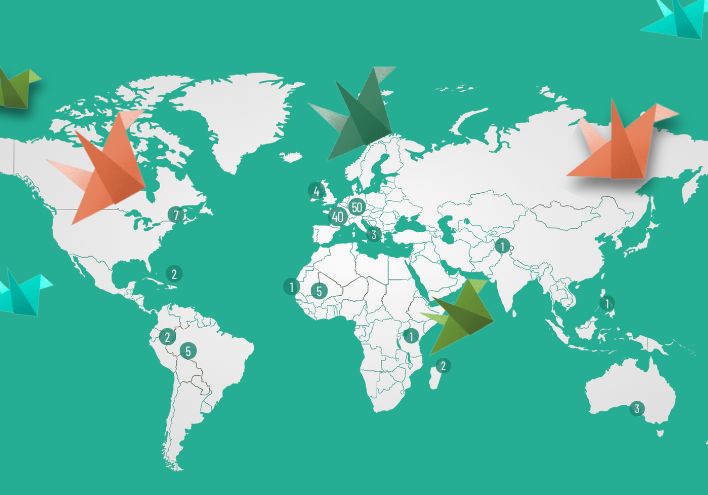
The spirit of the International Day for the Eradication of Poverty is rooted in collective action and powered by volunteers. Grassroots movements like ATD Fourth World play a vital role, they create opportunities for people to come together that might otherwise not exist. These groups unite local communities around a shared determination to reject poverty and ensure that human rights are respected.
Planning for October 17 doesn’t just start a few days before hand. It is a process that develops throughout the year. This includes listening, dialoging, building relationships, involving stakeholders in decision-making, and planning activities together.
A successful event is not defined by the number of resources but rather the participation. It is important that those who live in poverty can contribute to the preparations. October 17 highlights what people in poverty are a doing to resist their circumstances and build solidarity. Their stories inform how we enact change and how we can support people in both our local and international communities.
October 17 event organisers have a responsibility when it comes to communication. Photographs, videos, testimonials and messages must de dignified and avoid humiliating or sensationalist portrayals.
United Nations event in New York
October 17 will be given special prominence this year at the United Nations headquarters in New York.
Seeing as October 17, 2026, falls on a Saturday, the commemoration at the United Nations will take place on Friday October 16. The United Nations Department of Economic and Social Affairs, together with other agencies and partners, will mark the International Day for the Eradication of Poverty in collaboration with the International Committee for October 17 people with lived experience of poverty and those working alongside them.
This UN event comprises two parts:
- First in the prestigious ECOSOC chamber, personal accounts will ensure that people’s voices and lived experiences take centre stage. Poverty will not be discussed solely in terms of numbers or public policies. Those who experience it first-hand will be able to contribute directly to the discussion.
- Then the event moves to the gardens of the UN Headquarters. Here in front of the replica of the commemorative stone installed in 1996, a more symbolic and solemn ceremony will serve to highlight the historical link between October 17, human rights, and the call to action issued in Paris in 1987.
The presence of the commemorative stone in New York is particularly significant: the same message that was engraved at the Place de Trocadéro in 1987 continues to bring people together thousands of kilometres from Paris. People that are committed to a world without poverty.
How you can take part in October 17
There is no one way to mark 17 October. Fundamentally, the date was established so people who experience poverty could speak to the rest of society. A small gathering can be just as important as a large rally if it enables people who do not usually meet to talk to one another, listen to each other and build something together.
Here are a few ideas on how to mark October 17:
- give people a voice: sharing personal stories, mini-interviews, street interviews, an open mic night, and readings of texts, poems or songs;
- organise an exhibition: showcase photographs, drawings, posters or stories that highlight the message of October 17;
- give voices a platform: making short videos on a mobile phone, sharing personal stories on social media, or organising a video conference with others;
- use local media: suggest a radio programme, a news feature, a community newsletter or a message broadcast on a community radio station;
- get together over a meal: organising a charity meal brings together people from different ages and social backgrounds;
- walk together: organise a march or a gathering at a symbolic location where you live;
- discuss and reflect: organise a round-table discussion, a conference, a workshop or a discussion on housing and human rights;
- involve children and youth: organise quizzes, games, art workshops on the theme of peace, or educational activities on human rights;
- create a short play, a Forum theatre (interactive theatre with audience participation) or a dance-theatre performance based on real-life situations;
- spread the message in different ways: create posters, banners, T-shirts or leaflets setting out some key facts and ideas about poverty and housing;
- break down prejudices: organise a workshop on common misconceptions about homelessness,
- inadequate housing or people living in poverty;
build partnerships: bring together schools, associations, NGOs, libraries, cultural centres, community media and other local stakeholders; - involve the public: set up a message board where anyone can ask or answer questions such as ‘What does it mean to live with dignity?’ or ‘What can we do together to promote peace and human rights?’.
The key is not to lose sight of the purpose of October 17: to come together, to listen, to recognise the dignity of every person, and to act together.
From October 17 to year-round activism
October 17 represents a commitment that extends far beyond a single day.
In 2026, the theme ‘Safe homes for all’ invites us to take a fresh look at housing, homelessness, land and inequalities. It reminds us that housing is not a privilege reserved for those who can afford it, but an essential condition for living with dignity and exercising one’s rights.
The challenge is to make October 17 a day when people living in poverty are not merely invited to take part, but where their experiences, their voices, and their knowledge make a genuine contribution to shaping the commemorations and the societal changes that are needed.
Whether in Paris or New York, in a large institution or a small community hall, in a public square or over a meal, the essence of October 17 is ultimately the same: refusing to accept that poverty is inevitable and choosing to stand together to ensure that human rights are respected.
On this International Day for the Eradication of Poverty, let’s come together to address a question that concerns us all: how can the world be a place where everyone can have a home, live in peace and have their dignity respected?
The answer will not come from any one individual. It will be built through encounters, acts of solidarity and time together —not only on October 17, but every single day of the year!