


Entrepreneurship in the Democratic Republic of the Congo
A life shaped by resourcefulness and dignity
For families living in extreme poverty, securing a stable income is a daily struggle. Many are already making remarkable efforts to survive, whether through casual labour, small businesses, or support from neighbours and relatives. Yet these initiatives often remain fragile, limited by a lack of training, resources, or consistent support needed to sustain and grow them.
At ATD Fourth World, we believe that every family holds valuable knowledge and wisdom born from experience, ingenuity, and resilience. These families do not lack intelligence or capability. What they often lack are opportunities, support, and recognition. For this reason, all training must build upon what families already know, their lived experiences, strengths, and aspirations for their children.
The “Umoja ni Nguvu” families grow stronger together
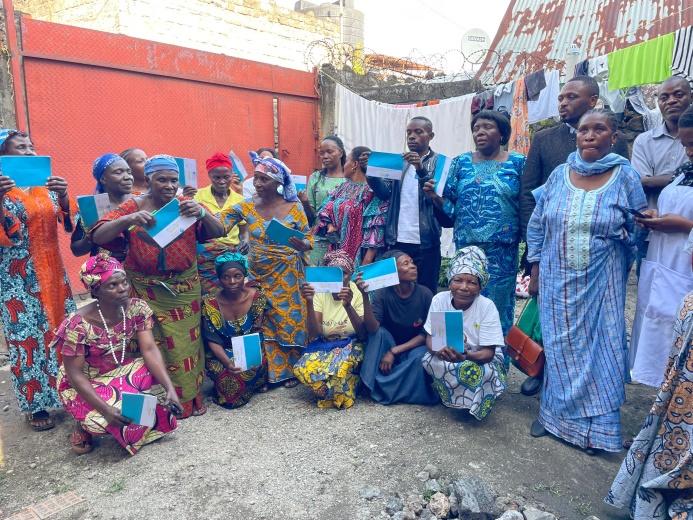
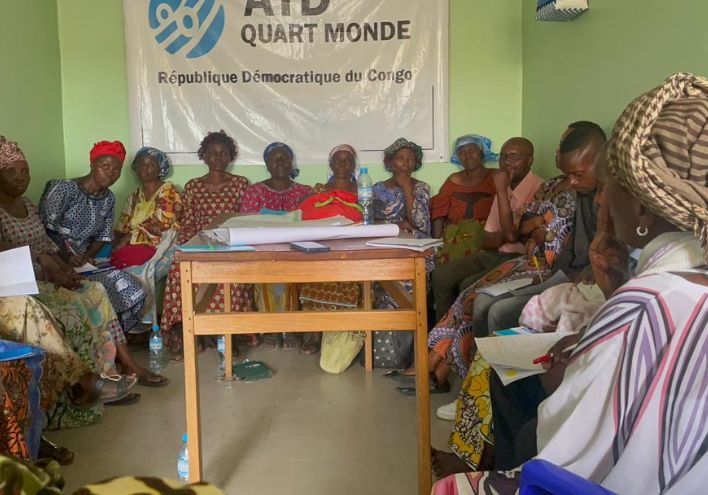
On 6 and 7 December 2025, members of the Umoja ni Nguvu (Unity is Strength) group gathered at the ATD Fourth World House in Goma, the Democratic Republic of the Congo (DRC), to participate in training focused on creating and managing income-generating activities (IGAs). These families were specifically involved because of Umoja ni Nguvu’s approach, which brings together people who share similar lived experiences and a common desire for collective change.
Although there were no formal facilitators, the sessions were guided by a steering committee with support from family members and friends. The gathering became a powerful space for learning and exchange, where participants strengthened their knowledge, shared experiences, and discovered new strategies to improve their small businesses.
The goal was simple yet impactful: to provide practical, accessible tools to help families organise their activities, manage income more effectively, reduce losses, and gradually build financial stability.
Margueritte NYANVURA, a member of ATD Fourth World, shared her experience with Likilimba, a community-based savings system in which each member contributes 2,000 Congolese francs weekly. In rotation, two members receive the pooled funds. Built on trust, this system enables individuals to access sums that would otherwise be difficult to save alone. It allows families to start small projects, strengthen their businesses, pay school fees, or respond to emergencies.
For Margueritte, Likilimba is far more than a financial mechanism. It is a lifeline, a source of solidarity, and a way to breathe, even when everything feels uncertain.
Masika KIHUNGA, also a member of ATD Fourth World, spoke candidly about her journey. She recalled a time when families relied on agriculture and livestock farming. Despite modest means, they could feed their households, maintain stability, and send their children to school. Life was grounded in solidarity and in working the land in harmony with the seasons.
Today, however, the land has become less productive, livestock resources have declined, and farming income is no longer sufficient to meet even basic needs. Yet rather than giving up, families have adapted. A key source of support for Masika has been AVEC (Village Savings and Loan Associations), in which many ATD Fourth World families participate. These groups strengthen solidarity, reinforce economic resilience, and promote financial independence.
Beyond financial systems, AVEC groups are spaces of trust and mutual support. Typically composed of 15 to 30 members, they enable participants to save, access small loans, grow their businesses, and cope with emergencies. Their primary aim is to strengthen families’ economic autonomy, especially for those without access to formal banking services.
Entrepreneurship as a family: a path to dignity
The training theme reflected this vision: “Entrepreneurship as a family: from idea to small business, good management practices, and AVEC dynamics”.
Beyond teaching financial skills, the training aimed to empower families to rebuild stability and improve their living conditions without ever compromising their dignity.
Creating an income-generating activity requires courage, perseverance, and support. The training showed how even a simple idea can take shape and grow when it is rooted in:
- The talents already present within the family;
- Everyday survival strategies;
- Aspirations for a better future;
- Cooperation and solidarity.
In the spirit of ATD Fourth World, family entrepreneurship is not about competition. It is about standing tall, providing for one’s children, rebuilding self-esteem, and contributing positively to the community.
Simple practices for stronger management
The training also emphasised essential practices for managing income-generating activities effectively: separating business income from household expenses, tracking costs, evaluating profits, and reinvesting gradually.
These simple but powerful habits enable families to better understand their activities, reduce financial risks, and make their efforts more sustainable over time.