


What if Building Peace Started with Children?
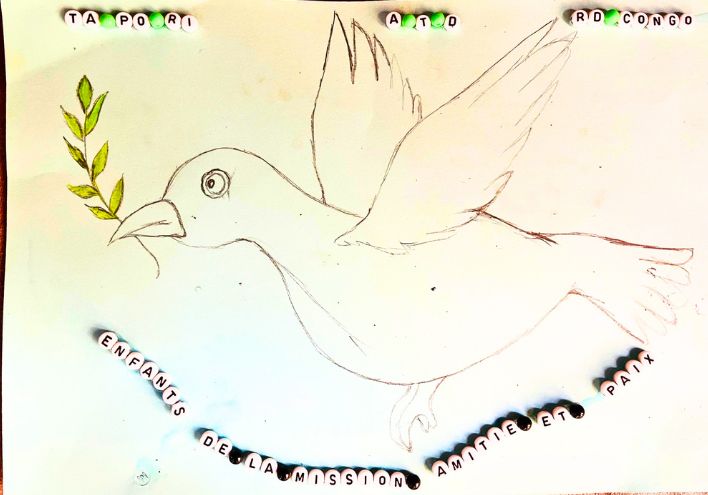
As we approach the third Tapori peace camp, we must consider the role children play in building peace.
Although children are often seen as the first victims of conflict, they can also forge friendships, take initiative, and contribute to peace within their communities.
When we talk about peace in the eastern Democratic Republic of the Congo (DRC), conversation often turns towards weapons, armed groups, negotiations, or political decisions. While these aspects are relevant, the children who grow up surrounded by this violence are seldom part of the discussion.
We may talk about children, but they are rarely listened to and often absent from the debates. But when children have access to spaces where their views are taken seriously, they express an understanding of peace which often exceeds that of adults. To children, peace is not an abstract concept: peace is the chance to play with one another; it is feeling safe; it is reconciliation after conflict; and it is leaving no one behind. This perception of peace should be taken into consideration.
Children also have a say in peace
For several years now, Tapori has given group leaders the opportunity to meet regularly with children in Bukavu, Goma, Uvira, and Kavumu. When these children are asked what peace means to them, their answers are often simple: “playing without fear”, “seeing mum or dad come home”, “being able to go to school easily”, or even “being able to stay with friends”. These words reveal how children experience the consequences of conflict while maintaining an unshakeable ability to hope.
As these meetings continue, the children’s words really make you think. Jeanne d’Arc, a member of the Emap/Muhungu Tapori group, recently shared that “Tapori is our house of peace.” These are simple words, yet they speak volumes. They remind us that children can contribute their own ideas about peace, provided they have the space to express themselves.
We often see children as those who need protection. Undoubtedly, they need protection, but they also need us to trust them. They can take initiative, resolve conflicts with peers, welcome new children into their group, and share what they have, reminding adults that peace begins in our everyday actions.
Tapori peace camps: sowing seeds instead of promising miracles
It was this belief that founded the Tapori Peace camps. By no means do these camps claim to solve all the problems in the eastern DRC in seven days; that would be unrealistic. Instead, we believe it is possible to instil qualities in children: a different way of seeing others, engaging in dialogue, and taking action within their communities.
After the second camp, the children spoke with confidence and proposed acts of solidarity within their neighbourhoods. They expressed their thoughts on peace through drawings, poems, and plays. At Tapori, we discover every day that the children are full of ideas, talent, and initiative, all of which deserve recognition. We learn as much from them as they learn from us.
In 2026, the Tapori Peace Camps will take place simultaneously in Bukavu, Goma, Uvira, and Kavumu, focusing on a topic that summarises our vision: “building peace based on friendship and children’s ideas”.
We chose this topic to remind people that peace isn’t only built in meeting rooms, diplomatic receptions, or large conferences. Peace is also built during school classes, within families, and on the playground. It is built when a child learns to listen to others, to respect differences, and to support one another.
Each child who learns the value of engaging in dialogue, who learns to resolve conflicts without violence, or who encourages a peer to join in is contributing, in their own way, to building a more peaceful society. These actions are discreet, often invisible, yet they are the first building blocks in constructing long-term peace.
Building child-centred alliances
This third camp will mark a new chapter for the Tapori Peace Camps. The two initial experiences taught us a great deal, but we must now turn our efforts to strengthening our links to child- and youth-centred organisations. We cannot bring about peace on our own. It is built when families, schools, organisations, youth movements, religious communities, the media, the authorities, and children themselves work towards a common goal.
Tapori Peace Camps aim to be a space where this partnership comes to life. Beyond the planned activities, the aim is to create a sustainable dynamic in which everyone plays their part, so that the children’s ideas are listened to, encouraged, and supported.
Trusting children
Nearly 500 children will participate in our third camp. It is our hope that they will leave with new friendships, memories that will help them grow, and, above all, the belief that they, too, can help transform their environment.
We often talk about children’s futures, but if we want peace to be sustainable, we need to create a space for them today. Children are not just the future of our society; they play an important role in shaping it now.
Building peace alongside children means recognising what they already contribute to the world. We must create spaces where they can be heard, their ideas encouraged, and their dignity fully respected. This is the Tapori Peace Camps’ goal. We will remain committed to this goal, with children at the forefront.