


The Pivot Cultural: From Past to Present
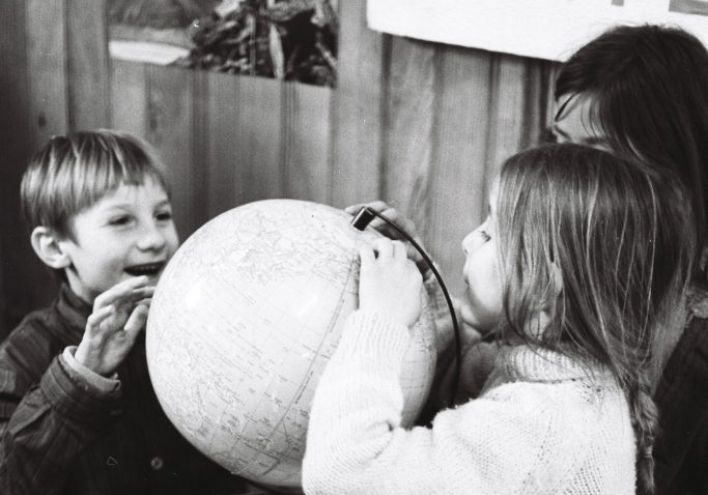
The Pivot Cultural1 (cultural centre) of Noisy-le-Grand is now unique in France, but in the 1970s some forty existed across the country, enabling many children to learn to live together, build trusting relationships with adults, and find their place in society.
On 30 January 1968, the first ATD Fourth World Pivot Cultural opened its doors in the emergency housing camp in Noisy-le-Grand. It consisted of a library, open since 1963, “a workshop where people work with their hands, and a physical activity room where the body is king”, according to a report entitled Le savoir dans la rue (“Knowledge in the Street”) published by ATD Fourth World in 1982. Soon, other Pivots opened in France: in the La Cerisaie housing estate in Stains, in the shantytowns of Francs-Moisins in Saint-Denis, in La Loubière in Toulon, and even in Switzerland, Belgium, and England. “Even though all Pivots are centres where activities revolve around books, each has its own characteristics shaped by the circumstances of its founding”, wrote ATD Fourth World volunteer corps member Annick Leray, the report’s author.
Offering workshops, outings, as well as more personalised support, these places are not nurseries and do not compete with schools. Instead, they are “places for sharing knowledge: the opposite of a tendency toward accumulating knowledge or fostering competitiveness between people”, she continued.
Hands-on experience
Created in parallel to ATD Fourth World’s street libraries, the Pivots aim to expand the horizons of children aged 6 to 12 by broadening their opportunities for exploration and discovery. The first report written by the architects of the Pivots, published in 1970 in the Igloos journal, explains the gap that the Pivots seek to bridge: ‘Books cannot fully meet children’s aspirations or needs on their own. As much as possible, knowledge acquired through reading should be reinforced through everyday observations. […] The Pivot Cultural must be able to integrate itself into the lives of children and create links with families and schools.’
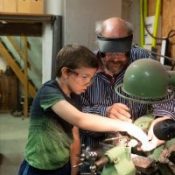
From the beginning, emphasis was placed on hands-on experiences with materials, allowing children to learn through movement and action rather than simply memorising new knowledge. “This is how they discover the world around them”, writes Annick Leray, “as well as what failure is. When failure takes the form of a wobbly chair or a cracked piece of pottery, it’s easier to analyse its causes and to transform them bit by bit into successes. This is really important, as each time you succeed beyond failure, you grow.”
The importance of the collective
The Pivots are also places where children can meet one another and build trusting relationships with adults. “Scientists, students, mechanics, and artists come to share their knowledge with the children,” explains Quentin Bernard, an ATD Fourth World volunteer corps member who has been leading the Noisy-le-Grand Pivot Cultural since 2021. The Pivot serves as a vibrant hub where “[p]eople from different trades, professions, and walks of life come together […] with the idea that knowledge only gains meaning when it is shared within a collective,” he continues.
The objective of the Pivot is to ‘offer each child meaningful connections to help them grow, and to provide them with a space where they can reveal their potential: to themselves — so that they can be proud of who they are and what they can do — and to their parents and the wider community.’ Annick said in 1982. More than half a century after its creation, the Pivot Cultural in Noisy-le-Grand continues this mission by building on the children’s own interests and intuitions.
The “treasure project” and its origins
“Our dad’s credit card is broken. Come on, let’s make money.” It was this sentence, repeated many times by two brothers — Simon and Manuel — to Quentin Bernard that sparked the ‘treasure project’. Initially, Quentin did not really know how to respond. He had noticed that money and the desire to ‘make it’ were very present in the conversations of most children attending the Pivot Cultural. At the time, he had to tell Simon and Manuel that “they weren’t allowed to make money, that it was against the rules,” but he felt bad about not going further.
So, together with forty children and around thirty adults, Simon, Manuel, and Quentin began working on the “treasure project” in October 2023. Lucie Mulot, a volunteer corps member, and Dominique Lavaur, an ally of ATD Fourth World, joined Quentin in thinking about how to “give children challenges to overcome that could encourage them to take control, come together, and reflect”.
An Idea Takes Shape
The first step in setting up the treasure project was to establish what the children meant by a ‘treasure’. Dominique suggested sensory exercises so they could discover, by touching different objects and listening to the sounds of various materials, what they wanted to create. “What does a treasure look like? Is it square, large, heavy or golden?” The questions multiplied, Quentin recalls. They organised a visit to the Monnaie de Paris, the institution that produces nearly one billion coins every year. Week after week, the children refined their project and agreed on the composition of their coin.
The children decided to have the words “precious children” engraved on each coin, along with their initials. They also wanted to depict a lioness to represent their belief that they were “too quick to anger”, as well as a parrot, “because we talk too much”, explains Abou, one of the children in the workshop. They wrote a poem telling the story of these animals, and gave them form through drawings, lithography, stained glass, and sculptures. They explored quarries in search of gypsum crystals and other minerals, while also reflecting on what a treasure represents to them: “secrecy, danger, and difficulty”, Quentin summarised.
In May 2024, the children journeyed to Dominique’s workshop in the Yvelines region of France to press, stamp, and emboss their initials onto the coins. And in preparation to speak publicly about their extraordinary adventure, the children created a display case for the treasure and prepared invitations for their community. For the organisers, each session was an opportunity to reflect on “how tools and practices usually reserved for a select few —which create division — can also bring people together,” explains the volunteer corps member.
‘We learned to support one another’
After an intense year of preparation, the children were eager to share their work on 2 October 2024 at the Monnaie de Paris; as Chams explains: “Most of us had never experienced adventures that lasted this long.” When Quentin, Lucie, and Dominique first began planning the “treasure project” in 2023, they imagined it would last only two or three months. They never imagined that a year later they would present the project to more than 200 people — including the French Defender of Rights, Claire Hédon — nor that the children would deposit at the Monnaie de Paris not only their coins, but “an understanding of the way that money literally holds a society and a family together”.
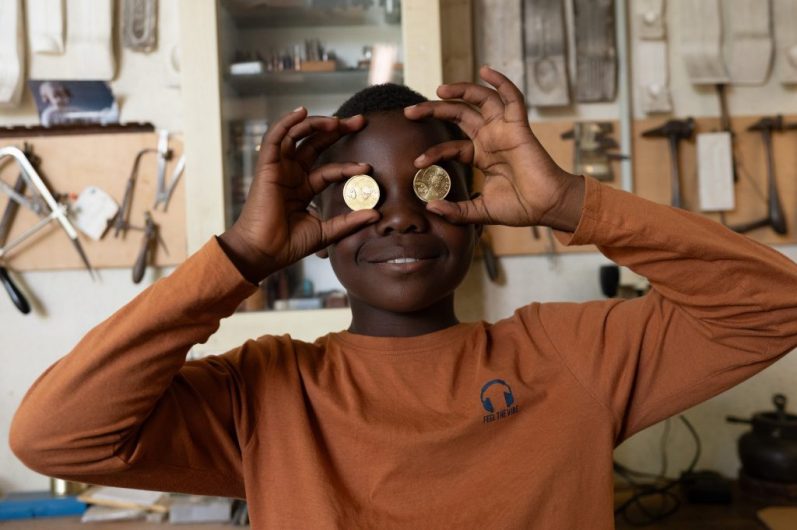
Herby, another young participant, reflected on the project: “We made beautiful things, delicate things, fragile things like stained glass. We worked really hard. When we went to the quarry during one of the sessions to extract crystals, for example, we couldn’t be scared or be silly. We had to be really calm.”
“To work together, we listened to each other. We developed a team spirit. […] Personally, I don’t feel precious; it’s the group that is precious and exceptional. We are precious because we work together. We are precious because what we created is rare and difficult to achieve. We are precious children because we accomplished things that people don’t usually accomplish. We succeeded because, at the Pivot, we learned to support one another,” Fatou continues.
A magnificent wooden chest displayed the coins in the halls of the Monnaie de Paris at the presentation of the treasure. In attendance was Daniel’s mother, who expressed great pride: it was her energetic 10-year-old son who had made the chest. When Daniel’s father saw it, he exclaimed, “Ah, that’s me!” By this, he was conveying ‘his happiness at having passed on to Daniel a love of manual work and the ability to dedicate himself seriously to it every Friday evening, even though school is difficult for him,’ explains Quentin. And Daniel himself believes that “parents invented the Pivot so children could learn to work”.
“It gives me chills — I wasn’t expecting this”, shared another mother while looking at photographs of the children working. Another admitted that she now saw her son differently; even though he is often excluded from school, “he knows how to exist in another way”, she said. And for Ismaël’s mother, the Pivot Cultural is to thank: it’s “like a family” she explains, “a place where children feel comfortable, listened to and helped. It shows us what our children are capable of and that we should be proud of them.”
The pride of the children was palpable when, in a solemn moment, the chief engraver of the Monnaie de Paris, Joaquin Jimenez, promised that the doors of his workshop would always remain open to them and granted them all “the rank of junior engraver”. “This bond is unbreakable and, if your paths should ever lead you in this direction, you will always be welcome in the engraving workshop for internships,” he told them. For Quentin, the “treasure project”, “through its duration and scale, allowed every child — especially those most excluded — to find their place through the contribution of something necessary and valuable to the final outcome”.
- This article combines two articles published on the ATD Fourth World France website: Le pivot culturel, un lieu de partage du savoir (“The Pivot Cultural: A Place for Sharing Knowledge”) and Les enfants du pivot culturel dévoilent leurs trésors (“The Children of the Pivot Cultural Reveal Their Treasures”).