


The Miofana Mianatra Miaraka Initiative
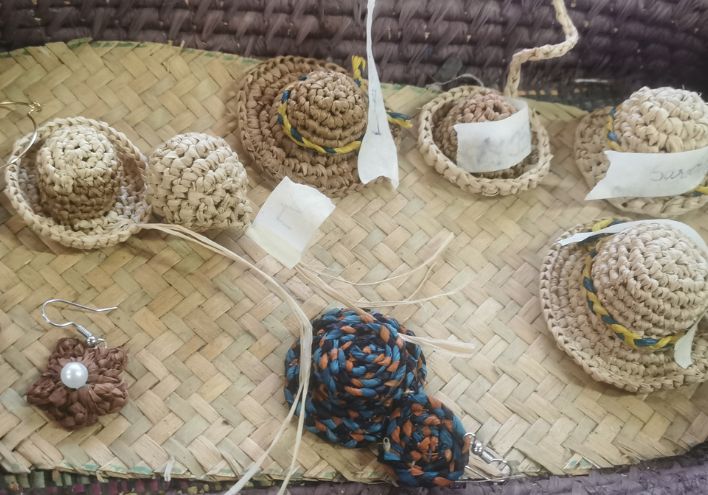
The origins of the Miofana Mianatra Miaraka (MMM) (“Training and Learning Together”) initiative date back to 2005, when members of ATD Fourth World Madagascar came together to share skills and support one another in accessing dignified work. While the program has evolved considerably over the years, its primary objective has remained the same: to provide people living in extreme poverty with opportunities to learn and train together, broaden their opportunities, and move towards fairer and more stable employment. Today, the programme supports between twenty and thirty participants each year.
A Neighbourhood Facing Multiple Challenges
MMM is aimed at residents of Andramiarana, a neighbourhood where many people earn a living by collecting, repairing, recycling, or reselling materials recovered from a nearby landfill. The challenges faced by the hundreds of families living in this area are complex and interconnected. Many households experience housing insecurity, financial instability, reliance on informal work, and limited economic opportunities. Educational attainment is often low among both adults and children, with literacy rates remaining a major concern, even among those who attended primary school.
Training Built Around Family Goals
In response to these realities, the MMM training workshop, based at the ATD Fourth World House, offers an individualised training programme lasting four to six months. Each group includes around a dozen women, referred to as “artisans”.
The programme is designed not only to support the individual participant but also to contribute to the well-being of her entire family. Husbands and children are encouraged to be involved from the outset, and participants receive a compensatory allowance to help offset income losses during training. Part of this allowance is reserved for family priorities such as education, housing improvements, rent, or unexpected medical expenses.
Participants attend three days per week and receive:
- Vocational training in industrial sewing, raffia crochet work, or food services for small local businesses;
- Broader educational support, including functional literacy, household management, and entrepreneurship skills;
- Activities that encourage self-expression, critical thinking, self-confidence, mutual respect, and group cohesion — helping participants prepare for the professional world;
- Opportunities to discuss issues affecting their lives, including gender discrimination, family relationships, and women’s roles in society.
From the courtyard to new opportunities
Over a year ago, the team met Fanomezanal1, a 23-year-old mother of two. Illiterate and living with her family, she earned a living by weaving mats from fabric scraps and collecting plastic. Like many women in the neighbourhood, she worked long hours for very little income, earning as little as 0.10 € per mat after two hours of work. By comparison, the statutory minimum wage is just over 2 € per day.
Initially hesitant about the programme, Fanomezanal agreed to attend an open house. Encouraged by other women, she later joined a new group of artisans. After specialising in raffia crochet work and completing six months of training, she secured employment with a local company known for its high-quality clothing. The transition was not easy. The workshop demanded precision and high standards, often requiring her to redo pieces repeatedly until they met expectations. During her first months of employment, she continued to receive financial and personal support to help her adapt.
Today, Fanomezanal takes pride in producing quality work and has developed expertise in braiding techniques. During her quieter periods, she volunteers to share her skills with future participants and is currently in the process of opening her first bank account. While not all artisans’ professional journeys achieve the same level of “success” as Fanomezana’s, the personal transformations each one experiences remain significant and equally important.
In a gloomy economic climate, an option for men too
At the end of 2025, several men from the community expressed interest in joining the workshop. In response, the programme welcomed ten men into a new training group.
In Andramiarana, many men work as rag collectors, bricklayers, cart pullers, labourers, water carriers, or river sand dredgers. These jobs are physically demanding, informal, and often insecure. By contrast, employment as a tailor or machine operator in a garment workshop offers the prospect of a stable income and greater social recognition, making it an attractive alternative.
For both men and women, one of the greatest challenges is adapting from a livelihood characterised by uncertainty but with relative freedom, to a more structured work environment with fixed schedules and expectations. Many participants are not accustomed to tracking working hours, managing leave time, or following a routine. Learning to navigate these changes is an important part of their transition into formal employment.